Drinking Water & Water Resources in Suffolk County
Suffolk County, New York’s most precious natural resource is water. The large aquifer system resting below Long Island, where Suffolk resides, is the sole source of drinking water for the county’s population of 1.5 million residents. The aquifer supplies over four hundred million gallons of water a day for more than 1,500 public-supply wells across both counties making up the entire island.2 Water in the aquifer system originates as precipitation, and then moves down through the soil and into the aquifers. Figure 1 depicts this process below. The four primary formations that make up the system are Glacial, Magothy, Raritan, and Lloyd, from shallowest to deepest. The deepest layer is mostly untapped, containing water that dates back more than five thousand years.9 While the aquifers provide drinking water, surface waters are used for food production, bathing, and recreation.1 The east end of the county is also known for its beaches, a great example of an aquatic resource for recreation. These beaches offer “a variety of amenities to visitors, such as swimming, picnic areas, camping sites, fishing, and more.” 18
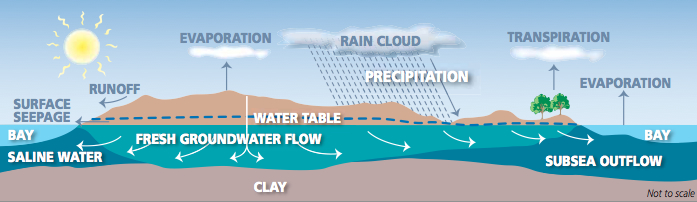
Figure 1
Bosworth, R. (2020, April 7). How are Long Island drinking water and surface water connected?. Long Island Clean Water Partnership. https://www.licleanwater.org/blog-source-1/how-are-long-island-drinking-water-and-surface-water-connected
Because of these limited resources for resident consumption, it is crucial that the county work to protect water supplies. The best way to protect groundwater in the county, according to the Suffolk County Water Authority, is to not pollute the aquifers.9 The Water Authority is an independent public-benefit corporation that serves roughly 1.2 million Suffolk County individuals, with the other three hundred thousand likely utilizing private-supply wells. The Water Authority operates without taxing power on a not-for-profit basis, and is one of the largest groundwater suppliers in the country.9 Suffolk sanitary code affirms that all available practical methods should be taken to prevent water pollution from sewage, industrial and other wastes, toxic or hazardous materials, and storm water runoff: “Policy of Suffolk County to maintain its water resources as near to their natural condition of purity as reasonably possible for the safeguarding of the public health.” 1 It is critical that the county stay on top of water health management, as it affects a wide variety of stakeholders, in and out of the county itself.
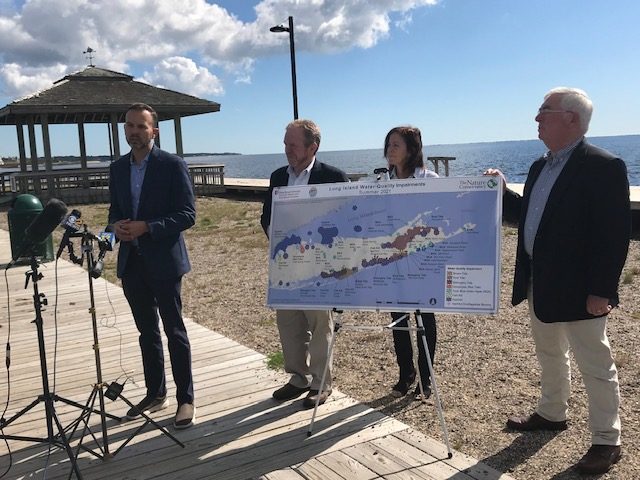
Figure 2
Roth, L. (2021, October 19). Long Island Water-quality assessment shows cause for concern – SBU News. SBU News – News & Features at Stony Brook University. https://news.stonybrook.edu/featuredpost/long-island-water-quality-assessment-shows-cause-for-concern/
There are a multitude of stakeholders who are at risk of being affected by changes in the water quality of Suffolk County. Most obvious are the residents of the county that are ingesting the drinking water. Whether supplied from private or public wells, it is important that thorough measures be taken in order to cooperate with the county’s guidelines for drinking water health. If there are toxic chemicals in the water that individuals are unaware of, they have a higher chance of suffering from resulting health issues and the government would be at fault.
Those employed by the Suffolk County Government and/or organizations such as the Water Authority are also major stakeholders, as they must continuously regulate the water quality, and tackle any unforeseen complications that they are hit with, such as water shortages or increased levels of pollution.
The New York State Department of Health is an important factor in Suffolk’s funding. They would not be able to finance as many tests and procedures without the involvement of the state. NYSDOH provides an annual grant of 252 thousand dollars for enhanced drinking water monitoring.4 Farmers and anyone involved in agriculture in the county are also to be considered, as in recent years, fertilizers and pesticides have been found in the groundwater: “In much of Suffolk County and northern Nassau County increasing nitrate levels in the aquifers and surface waters can be traced to cesspools and septic systems with additional contributions from fertilizers and air pollution.” 5
The final stakeholder to consider are those with privately-owned wells. Private wells are owned by individual property owners, as opposed to the government. Because of this, there is generally significantly less monitoring done to ensure its quality meets the same standards as that of public well water. However, in Suffolk, the government monitors private wells on new and existing properties in a way that is designed to point out any serious problems that may impact other nearby wells and communities: “No government agency in New York State provides a similar level of commitment to private well water quality.” 4
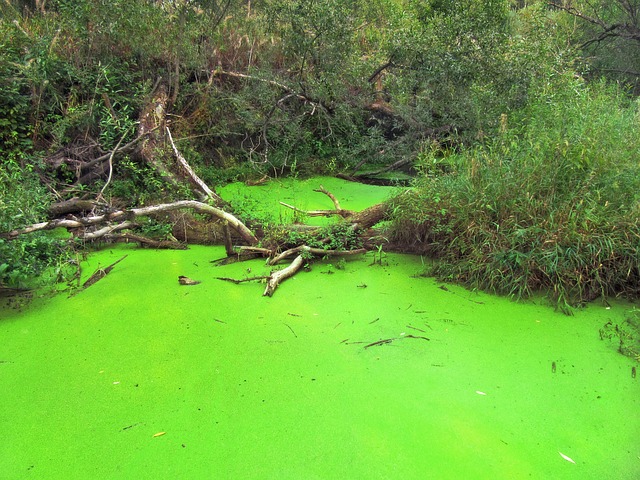
Figure 3
Nitrogen pollution from fertilizers threaten Long Island Water Sources. Save The Water. (2022, February 24). https://savethewater.org/nitrogen-pollution-from-fertilizers-threaten-long-island-water-sources/
In certain areas on Long Island, large amounts of freshwater pumping has resulted in saltwater intrusion into the aquifer system. This process, as seen in figure 4, occurs “when saltwater infiltrates freshwater aquifers and raises the groundwater table below the soil surface.” 19 This has led to contamination of groundwater, and has impacted streams, ponds, and coastal wetlands that rely on that water discharge to sustain them.2 Increased saltwater intrusion has been a problem for Suffolk County specifically since the 1970s.
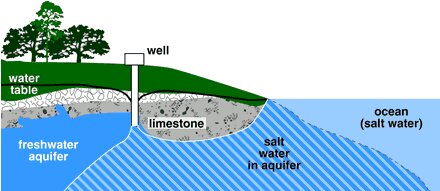
Figure 4
Hilaire, M. S. (2015, February 3). What is salt water intrusion?. H2O Care. https://h2ocare.com/salt-water-intrusion-2/
Another issue plaguing Suffolk water resources is contamination by means of human activity. This activity is from both point (industrial and commercial facilities) and nonpoint (domestic wastewater, road salt, fertilizers, pesticides, etc) sources. The main concern for the county overall is wastewater from septic systems contaminating the aquifer.2 Some cities and regions across the globe have begun utilizing treated sewage wastewater as a means of recharging their aquifers when levels are falling low.10 Suffolk may think about implementing a process like this to adapt on occasions when the groundwater is contaminated. However, aquifer recharge is also a concern for Suffolk County: “Increases in aquifer recharge and sea level in response to climate change can increase groundwater levels and streamflows creating concerns for groundwater flooding in subterranean infrastructure in low-lying areas where the unsaturated zone is already thin.” 2
Areas on Long Island as a whole are at risk of flooding due to excessive recharge, and in an area where sea level and storm damage have already caused detrimental levels of erosion to coastal properties, this flooding is very concerning. In 2022, the EPA released alarming data for two Suffolk water systems located in Riverhead and Hauppauge. In Riverhead, the water tested for chemicals that were thirty percent over the limit set by the EPA, while in Hauppauge, these chemicals were 335 percent over the EPA limit. In total, both of these systems serve a population of over 1.1 million people, and these chemicals, PFOA, PFOS, PFHxS, have been found to increase the risk of certain cancers in humans.11 One last issue recently faced by the county was a fall drought this past November. Increased pumping due to drought led to an increase of about 1.5 million gallons more than usual for that month alone.8 Thankfully, the Water Authority was able to meet demand without putting strain on the aquifer. Should the drought have occurred in the summer months, this is something that we may have seen.8

Figure 5
Pyun, Y. (n.d.). Map: Where pfas exceed new EPA limits. USA Today. https://data.usatoday.com/epa-pfas/
Wetlands in Suffolk County are crucial ecosystems for a multitude of reasons. In a county where nitrogen pollution has become a serious issue, these marshes act as filtering agents to remove the nitrogen as well as other nutrients impacting the water quality. They also act as a buffer during storms to prevent flooding and increase resilience towards sea level rise.20 The wetlands, however, are endangered by the very pollution they work to combat. To protect the ecosystems, the county has received funding to restore and strengthen them: “Since 2014, the County has been awarded over $2.7 million in Federal and State grant funding to implement wetland restoration projects along the County’s South Shore.” 20 These measures have been implemented to safeguard Suffolk residents from the impacts of sea level rise and climate change.
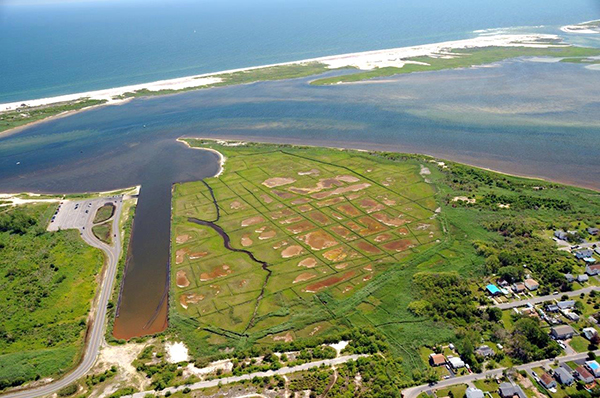
Figure 6
Departments. Suffolk County Government seal. (n.d.). https://suffolkcountyny.gov/Departments/Economic-Development-and-Planning/Planning-and-Environment/Water-Quality-Improvement/Coastal-Resilience
Suffolk has seen multiple sustainable solutions successfully implemented with the goal of protecting water quality for the county. Most recently, the approval of Proposition two following the 2024 election. This proposition, also called the Suffolk County Water Quality Restoration Act, generated four billion dollars to “modernize wastewater infrastructure and protect Long Island’s waters from nitrogen pollution”, as well as two billion dollars to “protect clean drinking water by conserving open space and wildlife habitats.” 12 Not only is this a sustainable solution by protecting the environment and public health, it also stimulates the economy in a non-harmful way by creating thousands of jobs in New York State and across the country. Another solution is the existence and efforts of the Water Quality Improvement Division of the Suffolk County Government. Some responsibilities of this division are to implement fertilizer and pest management programs, storm management programs, coastal resilience projects, and administer water quality protection initiatives funded by tax revenue.3 Lake Ronkonkoma is the largest freshwater lake on Long Island, and towns in Suffolk County all own parts of the lake surrounding shoreline. The lake is listed on the New York State Department of Conservation’s 303 List of Impaired Waters requiring water development.13 After receiving state funding, the Water Quality Improvement Division began creating a comprehensive watershed management plan that “gathered input, collected and analyzed watershed data, and developed management recommendations for both restoration and protection of water quality and public access.” 13 This solution has yet to reach completion, but with implementation of the plan, the division hopes to restore the lake to a functioning recreational space, as well as improve its water quality, increasing quality of life for Suffolk County residents.13
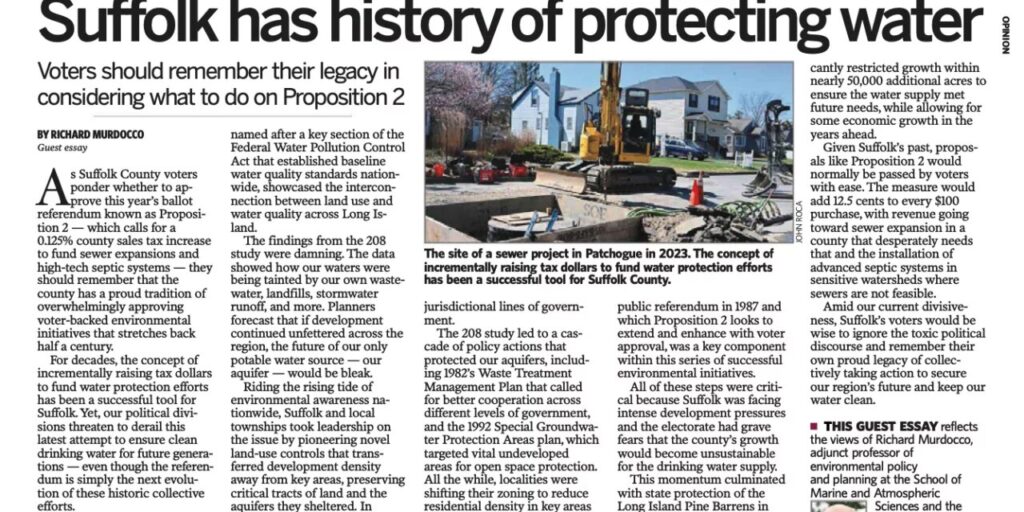
Figure 7
Newsday: Suffolk voters have a rich history of protecting water: The foggiest idea. The Foggiest Idea | Regional Planning with Local Impact. (2024, October 22). https://www.thefoggiestidea.org/2024/10/22/newsday-suffolk-voters-have-a-rich-history-of-protecting-water/
A sustainable solution addresses the social, economic, and environmental needs of both present and future generations through a multitude of strategies. Suffolk County has developed several initiatives aimed at safeguarding and enhancing the quality of the sole source aquifer’s water for residents. While these solutions have limitations and do not resolve every issue, they align with the principles of sustainability. The county is committed to the health and future of its people, implementing policies, regulations, and organizations that help communities adapt to climate change while actively mitigating its effects for the benefit of the environment.
Resources
- Departments. Suffolk County Government seal. (n.d.-b). https://www.suffolkcountyny.gov/Departments/Health-Services/Our-Environment
- Groundwater sustainability of the Long Island Aquifer System. USGS. (n.d.). https://www.usgs.gov/centers/new-york-water-science-center/science/groundwater-sustainability-long-island-aquifer-system#overview
- Departments. Suffolk County Government seal. (n.d.). https://www.suffolkcountyny.gov/Departments/Economic-Development-and-Planning/Planning-and-Environment/Water-Quality-Improvement
- Departments. Suffolk County Government seal. (n.d.). https://www.suffolkcountyny.gov/Departments/Health-Services/Environmental-Quality/Water-Resources
- Long island: Where does our water come from?. The Nature Conservancy. (n.d.). https://www.nature.org/en-us/about-us/where-we-work/united-states/new-york/stories-in-new-york/long-island-water-quality/where-does-our-water-come-from-/
- Pyun, Y. (n.d.). Map: Where pfas exceed new EPA limits. USA Today. https://data.usatoday.com/epa-pfas/
- From crisis to comeback: Long Island’s $6 billion clean water victory. The Nature Conservancy. (n.d.). https://www.nature.org/en-us/about-us/where-we-work/united-states/new-york/stories-in-new-york/help-us-clean-long-islands-water/
- Fall drought leads to record breaking water demand in Suffolk County. Suffolk County Water Authory. (2024, November 6). https://www.scwa.com/fall-drought-leads-to-record-breaking-water-demand-in-suffolk-county/
- Environment. Suffolk County Water Authory. (n.d.). https://www.scwa.com/water-quality/environment/
- Parent, M. (2023, September 26). Depleted aquifers: Causes, effects, solutions. Earth.Org. https://earth.org/depleted-aquifers-causes-effects-and-solutions/
- PFOA, PFOS, and related Pfas Chemicals. American Cancer Society. (n.d.). https://www.cancer.org/cancer/risk-prevention/chemicals/teflon-and-perfluorooctanoic-acid-pfoa.html
- Clean water transcends politics: Voters approve $6 billion to protect clean water and revitalize Long Island’s coasts. The Nature Conservancy. (n.d.). https://www.nature.org/en-us/newsroom/suffolk-approves-prop2/
- Departments. Suffolk County Government seal. (n.d.). https://www.suffolkcountyny.gov/Departments/Economic-Development-and-Planning/Planning-and-Environment/Water-Quality-Improvement/Lake-Ronkonkoma-Watershed-Management-Plan
- Bosworth, R. (2020, April 7). How are Long Island drinking water and surface water connected?. Long Island Clean Water Partnership. https://www.licleanwater.org/blog-source-1/how-are-long-island-drinking-water-and-surface-water-connected
- Roth, L. (2021, October 19). Long Island Water-quality assessment shows cause for concern – SBU News. SBU News – News & Features at Stony Brook University. https://news.stonybrook.edu/featuredpost/long-island-water-quality-assessment-shows-cause-for-concern/
- Nitrogen pollution from fertilizers threaten Long Island Water Sources. Save The Water. (2022, February 24). https://savethewater.org/nitrogen-pollution-from-fertilizers-threaten-long-island-water-sources/
- Pyun, Y. (n.d.). Map: Where pfas exceed new EPA limits. USA Today. https://data.usatoday.com/epa-pfas/
- Departments. Suffolk County Government. (n.d.). https://suffolkcountyny.gov/Departments/Parks/Activities-and-Attractions/Beaches
- Newsday: Suffolk voters have a rich history of protecting water: The foggiest idea. The Foggiest Idea | Regional Planning with Local Impact. (2024, October 22). https://www.thefoggiestidea.org/2024/10/22/newsday-suffolk-voters-have-a-rich-history-of-protecting-water/
- Hilaire, M. S. (2015, February 3). What is salt water intrusion?. H2O Care. https://h2ocare.com/salt-water-intrusion-2/
- Departments. Suffolk County Government seal. (n.d.). https://suffolkcountyny.gov/Departments/Economic-Development-and-Planning/Planning-and-Environment/Water-Quality-Improvement/Coastal-Resilience