Waste Management in Suffolk County
Suffolk County is one of two counties that make up Long Island, New York. Out of the 2.9 million residents on the island as a whole, over 2.6 million tons of waste are produced per year, excluding an additional 5.3 million tons of construction and demolition waste.1 There are an increasing number of issues involving waste management for Suffolk residents and government officials in recent years. Most notably being the set closure of the Brookhaven landfill and the large volume of municipal solid waste (MSW) being disposed of. Solutions are in talk to improve the state of MSW overflow, as well as the energy inefficiencies associated with their disposal. A variety of stakeholders are involved in these issues, some at more of a disadvantage than others.
One of the main issues facing Suffolk County is the extreme amount of municipal solid waste (MSW) being produced on an annual basis with minimal area to dispose of it. There are about five landfills on Long Island, each of which is located in Suffolk. The Long Island Landfill Law “restricts the types of waste that can be landfilled on Long Island and, for the most part, prohibits the disposal of MSW.” 2 MSW is commonly referred to as trash or garbage because it is made up of everyday disposable items such as product packaging, grass clippings, furniture, clothing, bottles, food scraps, newspapers, appliances, paint, and batteries.3 This waste can come from residential homes, schools, hospitals, and other businesses. Figure 1 depicts the amounts of MSW in tons both exported and imported from Suffolk County in 2018.

Figure 1.
New York State Solid Waste Management plan. (n.d.). https://dec.ny.gov/sites/default/files/2023-12/finalsswmp2023.pdf
Most of the waste exported out of state was shipped to Virginia, Ohio, and Pennsylvania.2 This exporting is an issue in itself: “Exporting waste off Long Island has become another waste management approach but the hauling of waste long distances is extremely costly, impacts communities and the road network, and creates excessive GHG emissions.” 4 To move the MSW from state to state, we use tractor trailers 5, which take a large amount of trips back and forth to complete a delivery, exacerbating Suffolk County’s emissions and harming our local ecosystems as well as those of other areas in the country.
A proposed solution for this problem is making the switch from tractor trailers to rail. In the United States, about 20 percent of all waste is transported by rail. In Suffolk County, however, that number is as low as 1 percent.5 On May 8th 2024, Suffolk executive Ed Romaine held the first Regional Solid Waste Summit in the county. 13 local governments were represented at the meeting to discuss the MSW crisis. If we were to switch completely to rail transportation, our GHG emissions would see a significant drop. One 25-car freight train can replace the work of 125 18-wheel tractor trailers, which make up 99 percent of the waste transportation fleet.5 Adding rail service could also provide new jobs for unemployed Suffolk County residents, making this solution not only sustainable because it protects the environment, but because it serves the community, as well.
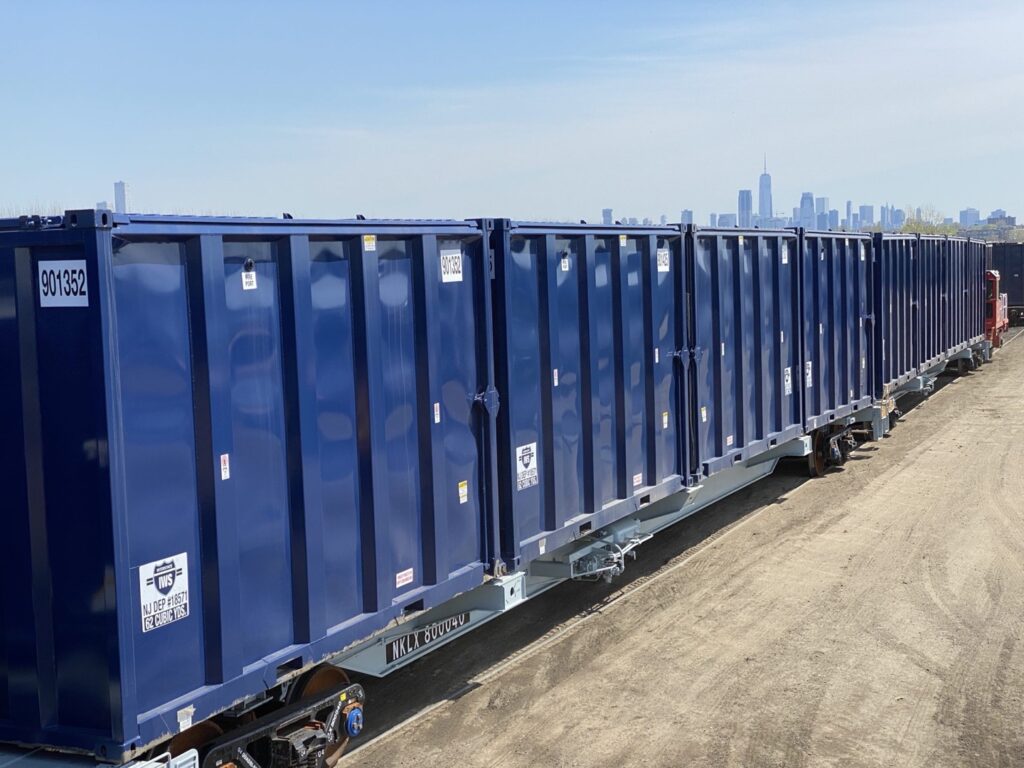
Figure 2.
Greener transport: Reduce the dependence on long haul transportation with waste by rail. Interstate Waste Services. (2024, September 12). https://interstatewaste.com/sustainability-greener-transport/
Another major issue facing Suffolk County is the impending closure of the Brookhaven landfill. Originally set to close in 2024, its full shutdown is now expected by early 2028.1 At the end of 2024, the landfill stopped accepting construction and demolition debris entirely, now only using the remaining space for waste that is to be burned into ash.6 This ties into the MSW crisis, in that it cannot be dumped in the Brookhaven location anymore. The state permit for the facility expires in 2026, and there are still many questions left unanswered for Suffolk County residents. Ed Romaine has stated that a regional solid waste plan is crucial: “Suffolk’s current waste management system is hobbled because the 10 towns each have their own waste disposal and recycling systems. That leads to confusion and inefficiency.” 7 One of Romaine’s suggestions to alleviate the stress produced by the sheer amount of waste the county has to deal with is to establish two new waste transfer stations; one in Yaphank and the other in Kings Park. However, he emphasizes that even this will not be enough, and the switch to rail transport is critical.
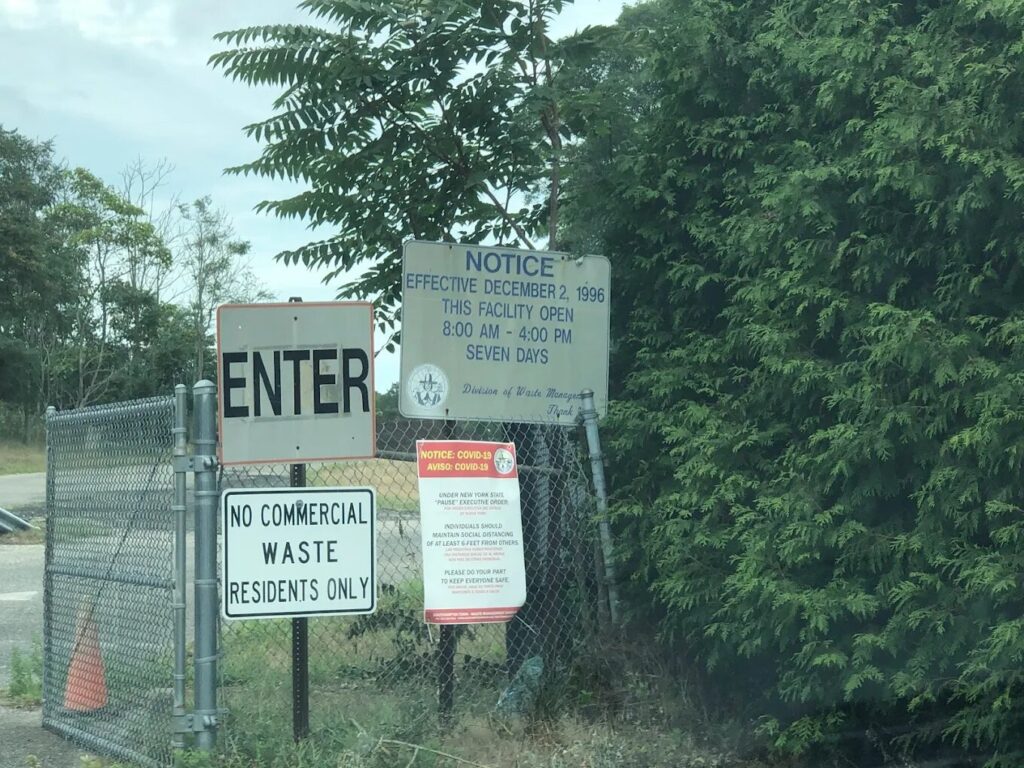
Figure 3.
Lyle C. (2021). Hampton Bays Transfer Station. Google Reviews.
Certain county leaders are against the establishment of the new waste transfer locations. President of the Brookhaven NAACP Georgette Grier-Key believes that the project has the potential to double the amount of vehicles coming in and out of surrounding minority communities.6 This is a clear sustainability issue because it shows blatant disregard for the community at large, prioritizing what the government sees as most important for the smooth functioning of the county and not the wellbeing of its citizens. The NAACP is concerned that waste company Winters Brothers will turn the towns into a dumping ground and that there is no real reason to turn over local land to the federal government: “For Winters’ proposal to work, the company needs to finalize how it would use hundreds of acres of property it owns north of the Brookhaven Landfill.” 8 This is not the first time landfills in Suffolk County have been accused of disadvantaging lower income neighborhoods. In 2019, the town of Brookhaven was ordered to stop the landfill from emitting strong odors that permeated throughout the town, or they were to be fined.9 There have also been investigations into violations of environmental laws regarding ash management in these same neighborhoods.10
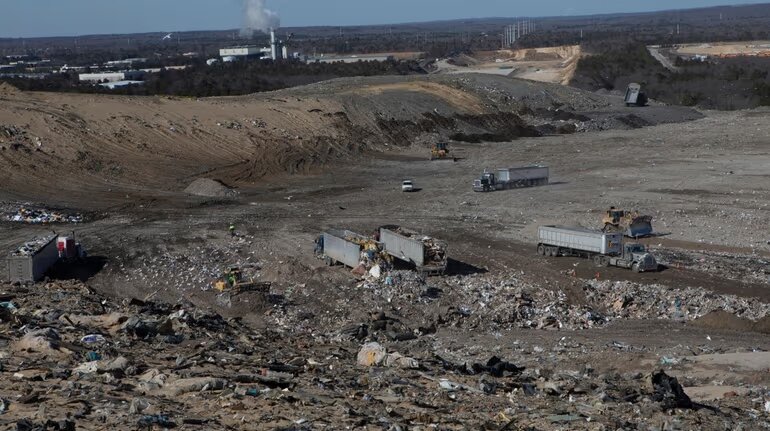
Figure 4.
Board, T. E. (2021, December 4). Brookhaven Landfill raises heap of questions. Newsday. https://www.newsday.com/opinion/editorials/brookhaven-landfill-study-h20645
Recycling materials that are currently incinerated is being explored as an alternative to the widespread burning taking place in Suffolk County. MSW cannot be landfilled at all, and nearly all of it, if not exported, is burned to ash. Certain types of ash are more susceptible to flying and entering the atmosphere, causing more air pollution. There are also metals in ash that can be useful if recovered.10 Recycling in general has been a problem for the county, as the marketing for recyclable materials is very lackluster: “If we have better markets, there’s going to be more interest in recycling more, and better economics with respect to those commodities.”11 Figure 4 depicts one Suffolk County town’s list of what can and cannot be recycled that was shared to the town Facebook page. Member of Stony Brook University’s Waste Reduction and Management Institute, Michael White, believes that the local government can always do more to promote recycling, but it’s up to the residents to educate themselves. A goal of the University Institute is to reduce the impact of waste generation through policy and the promotion of recycling and other waste prevention strategies.11
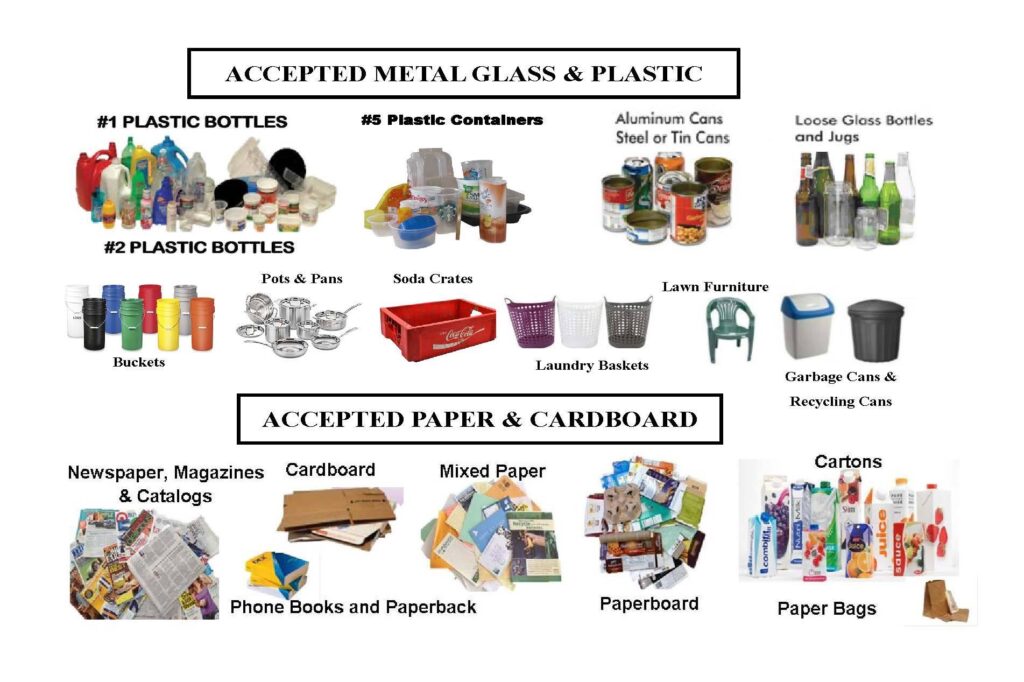
Figure 5.
Town of Islip – Government. Facebook. (n.d.). https://www.facebook.com/share/p/16T2qesXun/
For local stakeholders such as the government, NAACP, Suffolk County residents, waste companies and their employees, and the Waste Reduction and Management Institute at Stony Brook University, the success of the presented solutions weighs heavy. While nothing has been finalized or implemented so far, there’s still potential moving forward. Naturally, there are limitations to each of the solutions along the lines of price and ethics. The way we currently handle waste is expensive, but switching to rail will also cost a large amount of money. The possibility of minority communities being disadvantaged while other parts of the county benefit is not only unethical but goes against our definition of sustainability, which emphasizes equitable development. Ultimately, the challenge lies in finding the way to balance cost, ethics, and sustainability, while ensuring that any waste management progress benefits all parties fairly and responsibly.
References
- The state of waste. (n.d.-c). https://www.wintersbros.com/wp-content/uploads/2023/02/Winters-Bros-State-of-Waste-Report-2023.pdf
- New York State Solid Waste Management plan. (n.d.). https://dec.ny.gov/sites/default/files/2023-12/finalsswmp2023.pdf
- Environmental Protection Agency. (n.d.). Municipal solid waste. EPA. https://archive.epa.gov/epawaste/nonhaz/municipal/web/html/
- Cleaner Greener Long Island Regional Sustainability Plan. (n.d.). https://www.suffolkcountyny.gov/Portals/0/formsdocs/ecodev/Energy/Long-Island-CGC-Plan-Report_0513.pdf
- The Suffolk County News. (2024, June 19). Seeking solutions to Long Island’s solid-waste crisis. The Suffolk County News. https://www.suffolkcountynews.net/stories/seeking-solutions-to-long-islands-solid-waste-crisis,95141
- McGiff, S. (2024, March 16). A year later, plans unsettled for the closure of Brookhaven Landfill. WSHU. https://www.wshu.org/long-island-news/2024-03-15/suffolk-regional-plan-brookhaven-landfill
- Winter, K. (2024, March 17). Suffolk’s 10 towns to create plan for Regional Waste Program. Citizens Campaign for the Environment. https://www.citizenscampaign.org/whats-new-at-cce/2024/3/17/suffolks-10-towns-to-create-plan-for-regional-waste-program
- Allen, J. D. (2024, May 9). NAACP worries about Suffolk County’s closed-door discussions on trash plan. WSHU. https://www.wshu.org/long-island-news/2024-05-08/naacp-suffolk-county-trash-plan
- Carlson, S. (2020, May 20). State Orders “immediate” action to rid Brookhaven landfill of odor. Citizens Campaign for the Environment. https://www.citizenscampaign.org/whats-new-at-cce/2019/9/25/state-orders-immediate-action-to-rid-brookhaven-landfill-of-odor
- Long Island’s waste future uncertain as landfill closure looms. (n.d.). https://www.waste360.com/landfill/long-island-s-waste-future-uncertain-as-landfill-closure-looms
- Winter, K. (2025, January 3). New Stony Brook Waste expert to tackle recycling, other challenges posed by closure of Brookhaven’s landfill. Citizens Campaign for the Environment. https://www.citizenscampaign.org/whats-new-at-cce/2025/1/2/new-stony-brook-waste-expert-to-tackle-recycling-other-challenges-posed-by-closure-of-brookhavens-landfill
- New York State Solid Waste Management plan. (n.d.). https://dec.ny.gov/sites/default/files/2023-12/finalsswmp2023.pdf
- Greener transport: Reduce the dependence on long haul transportation with waste by rail. Interstate Waste Services. (2024, September 12). https://interstatewaste.com/sustainability-greener-transport/
- Lyle C. (2021). Hampton Bays Transfer Station. Google Reviews.
- Board, T. E. (2021, December 4). Brookhaven Landfill raises heap of questions. Newsday. https://www.newsday.com/opinion/editorials/brookhaven-landfill-study-h20645
- Town of Islip – Government. Facebook. (n.d.). https://www.facebook.com/share/p/16T2qesXun/