Agriculture, Food, and Nutrition
The east end of Long Island, New York, or Suffolk County, is home to a bustling tourist population, predominantly in the summer months. The allure of the region has attracted 41.8 million visitors annually who spent about 7.5 billion dollars across various sectors in 2023.13 The area is known for its beaches, restaurants and shops, as well as its farms and vineyards. To outsiders, it seems to be a hub of wealth and luxury, however uneven distribution of income has created a handful of obstacles, specifically regarding access to healthy and affordable food. Areas with lower income experience significantly higher rates of diet related diseases and are less likely to have healthcare or insurance coverage in these situations. Though Suffolk is the number four county in New York State for agricultural production,4 the people living below the poverty line rarely reap the benefits.
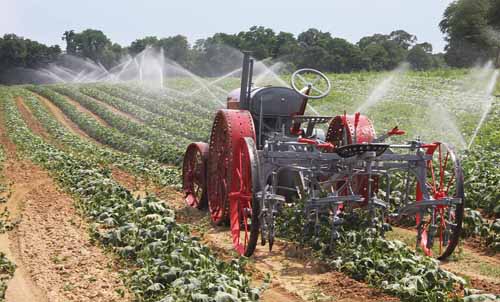
Figure 1.
Pinciaro, J. (2013, October 27). Preserved farmland may see restrictions relaxed. The Suffolk Times. https://suffolktimes.timesreview.com/2013/10/looser-regs-pitched-for-preserved-farmland-parcels/
The agricultural industry is known to exert considerable pressure on the environment and is closely linked to global fluctuations in food security. Reducing waste generated during agricultural processes offers a sustainable approach to enhancing nutrition and addressing regional food insecurity. Additionally, conserving water and prioritizing soil health are essential strategies for protecting ecosystems and preserving natural resources. Suffolk County agriculture in specific generates roughly 226 million dollars in annual sales across 560 farms.4 These farms also stimulate the economy by employing nearly five thousand residents. The county ranks number one in the State in greenhouse, nursery, sod, cantaloupe, cauliflower, mushroom, and pumpkin production.4 “Suffolk County’s rich agricultural heritage serves as the backbone of the Long Island way-of-life and helps sustain our county’s economic growth. Not only do our farms, farm stands and vineyards generate the tourism dollars that support our local restaurants and service industries, they also provide the fresh produce that feeds people locally and around the globe.” 4
Almost eighty percent of the farmland acreage in Suffolk is involved in the food production process. Produce such as vegetables, potatoes, fruits, fish, wine, and grapes are exported from Suffolk to other parts of the world, however they don’t have any imports that are unique to the area.19 While the county tends to boast of its agricultural successes, it’s important to note the environmental impact of these practices on a local and international scale. Global food systems, including farming, accounted for 31 percent of man-made greenhouse gas emissions in 2019.8 Large amounts of water are also utilized for crops and livestock. Figure two displays what carbon emissions could look like by mid-century should the US continue to follow aggressive international commitments. Agriculture would make up for the largest portion of these emissions at nearly 40 percent. The impacts of this could make a climate crisis inescapable.
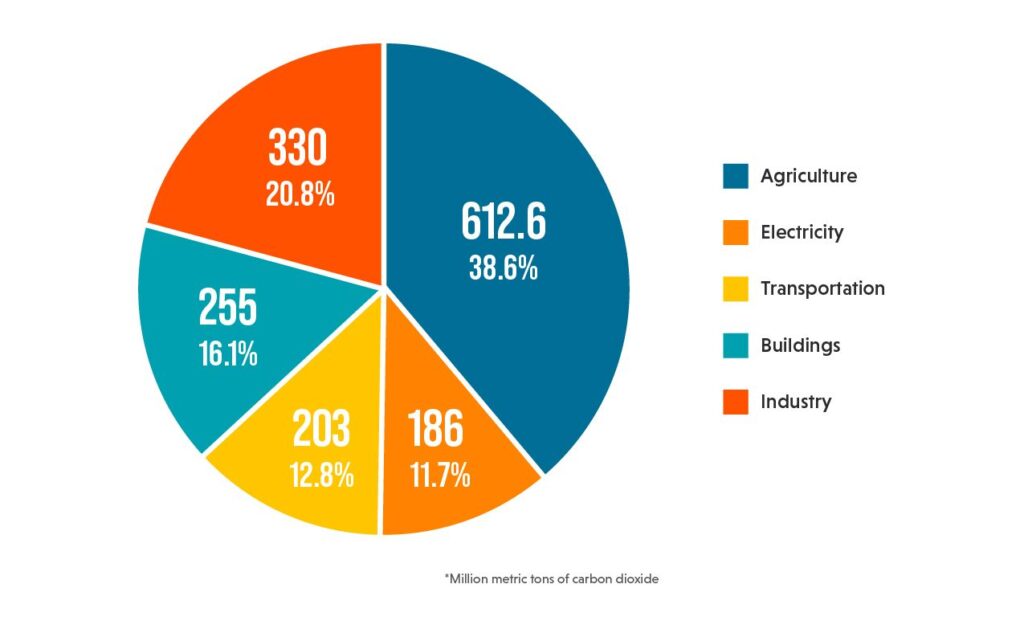
Figure 2.
Will agriculture be America’s leading source of greenhouse gas emissions? | environmental Working Group. (n.d.). https://www.ewg.org/news-insights/news/2024/10/will-agriculture-be-americas-leading-source-greenhouse-gas-emissions
With agriculture comes economic implications. Suffolk farmers export their crops out of state and globally, and changes in season as well as government administration have the power to influence the costs of this. Suffolk County has a Foreign-Trade Zone to reduce international trade costs: “Companies in an FTZ can use procedures that allow for delayed, reduced, or elimination of duty payments for foreign merchandise.” 9
Figure 3.
Departments. Suffolk County Government seal. (n.d.). https://www.suffolkcountyny.gov/Departments/Economic-Development-and-Planning/Business-Development-and-Innovation/Suffolk-County-Foreign-Trade-Zone-52
Food production in Suffolk is among one of the many industries that takes advantage of the zone, giving them a competitive advantage in the agriculture market. The new tariffs imposed by President Trump place a 25 percent tax on goods imported from Canada and Mexico, and a 10 percent tax on goods from China.12 Some residents of the county believe that these tariffs will allow Suffolk-produced items to thrive, but only time will tell. The east end’s seasonal economy driven by tourism also increases the price of land for agricultural use and food for consumer purchase, making it harder for lower income families to afford nutritional meals.1
Over 1 in five adults on Long Island worry about having enough money to buy meals. Within Suffolk County, over twenty percent of residents are food insecure.11 These individuals are forced to rely on cheaper options which tend to be more caloric and less healthy. This can cause serious health issues, especially for children who grow up with such diets from an early age. According to Suffolk County Department of Health Services Commissioner Gregson Pigott, “there [are] long-standing ‘pockets of food insecurity’ in the county as far west as Amityville and as far east as Southampton.”11 Of the two counties on Long Island, Suffolk fares worse in terms of food accessibility. According to Feeding America data visualized on the map in figure 4, the food insecurity rates across Suffolk County are between zero and twenty six percent.

Figure 4.
Hunger & Poverty in Suffolk County, New York: Map The Meal Gap. Overall (all ages) Hunger & Poverty in the United States. (n.d.). https://map.feedingamerica.org/county/2022/overall/new-york/county/suffolk
Over one hundred thousand residents were suffering from food insecurity in 2022, with the number only growing in the past three years.17 Students attending public schools in the county are all given equal opportunities to receive nutritional, balanced meals. The district provides 8,500 lunches and 6,000 breakfasts daily, and starting during the 2024/25 school year, you could sign up to receive these meals for free. This means that disadvantaged students do not have to worry about food accessibility during the school week.20 The residents play a key role in the functioning of the county’s food system.

Figure 5.
Food & Nutrition Services / Home. (n.d.). https://www.spsk12.net/domain/126#:~:text=Suffolk%20Public%20Schools’%20Food%20%26%20Nutrition,6%2C000%20breakfasts%20each%20school%20day.
There are a handful of stakeholders that are at risk when it comes to food and agriculture industries in Suffolk County. As previously stated, those living below the poverty line generally intersect with the food insecure population. Those with more steady income also play a part in the system, as they have the potential to provide for other communities by donating food to drives and shelters, as well as volunteering. The local and federal government are responsible for establishing and enforcing laws that can either support or disadvantage those facing food insecurity, as well as those involved in agricultural practices. This includes the foreign countries we trade with. A new grant program, Nourish Suffolk County, was introduced at the end of 2024 to support local farmers and residents struggling to find food. This program is in collaboration with Island Harvest Food Bank, as well as local farmers. There are three goals being addressed in hopes of completely eliminating food insecurity in the county down the line: “One, we want people to eat healthier. Two, we don’t want anyone to go hungry. Three, we want to support our farmers.”3 This project could bring over two hundred thousand meals to Suffolk families in need thanks to the initial 250 thousand dollar grant.

Figure 6.
Island Harvest Food Bank (@islandharvest). “Nourish Suffolk County Initiative Announced.” Instagram. https://www.instagram.com/islandharvest/p/DCkcr-qJmIK/
The money is being used to purchase produce grown locally. They are not only distributing food, but investing in the future of Suffolk agriculture.3 This being a relatively new project, it’s difficult to find any progress or success updates at this time. I suspect it will be relatively successful, however given the amount of people facing insecurity in the county, two hundred thousand meals may not be enough. I appreciate that County Executive Ed Romaine also hopes to extend the program to school districts. On a governmental level, the food stamps program in Suffolk, Supplemental Nutrition Assistance Program (SNAP) provides food to low income families so they can budget for nutritious groceries.
Being conscious of where you purchase your groceries is an individual solution to decreasing global carbon footprint. Paying attention to how many miles the food you consume is travelling to make it to your plate and focusing on locally-grown and harvested ingredients not only benefits the local economy, but contributes much less to transportation emissions and water and soil pollution. It also reduces dependency on outside sources such as exports that exacerbate food insecurity. Buying locally promotes seasonal eating, which “aligns with natural ecological cycles and reduces environmental impact.” 21 Suffolk has worked to greatly increase the number of farmer’s markets filled with local vendors available to residents across the county. There are currently over one hundred markets for people to choose from, with products such as fresh produce, fish, and prepared goods.22 Green Thumb Organic Farm in Southampton, one of many local markets in the county, is pictured in figure 7 with a variety of fresh and locally sourced produce for purchase. Food stamp program, SNAP, is also available at farmer’s markets that have program-registered vendors, making local food accessible to all residents regardless of socioeconomic status. Another governmental initiative, WIC Farmers Market Nutrition Program is a way for local farmers and vendors to provide resources to those at risk, specifically children.22
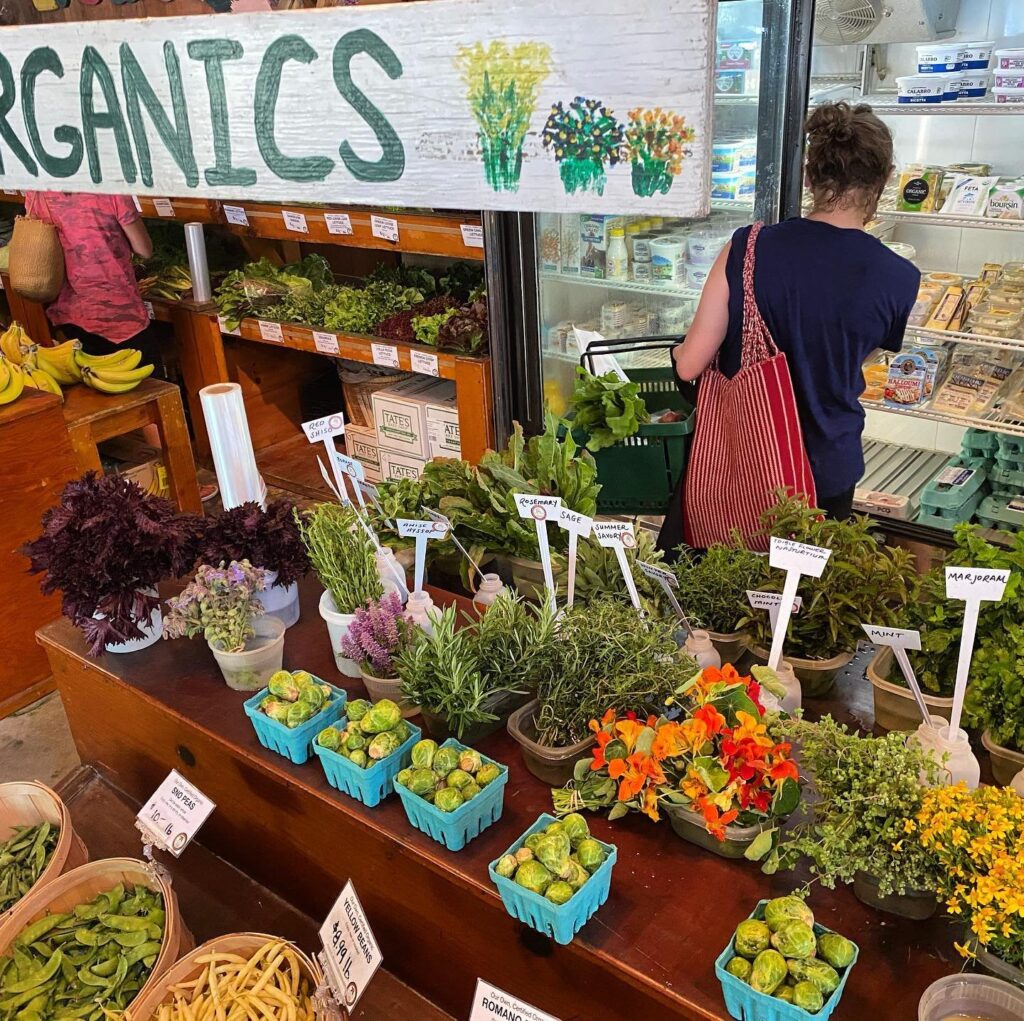
Figure 7.
Suffolk County Farmers Markets. Discover Long Island. (n.d.). https://www.discoverlongisland.com/places-to-go/suffolk-county/things-to-do/farms-orchards/farmers-markets/
Fishing is an important industry in Suffolk County, given that it is bordered almost entirely by large bodies of water. Shellfish farming is the most profitable for the county economy: “Our waters once provided a substantial portion of the world’s hard clams, scallops, and oysters” 22 Unfortunately, after excessive harvesting, the waterways and bays that are home to the shellfish populations have become ecologically unbalanced. To combat this, a shellfish aquaculture program was developed to transfer the farming from public to private underwater property. When done at secure locations that pose no threats to commercial fishing and allow the public lands to be restored to their previous states.22 Various associations on Long Island also provide free resources and information on the best management practices and certified vendors to purchase from. Some vendors in Suffolk County include Southold Bay Oysters in Southold, Shellworks in Southampton, and Violet Cove Oysters in Mastic Beach.
A major barrier to eliminating food insecurity in Suffolk County is eligibility for government assistance. SNAP is an extremely beneficial program, but unfortunately a large percentage of the at-risk population in the county does not meet the requirements to receive those benefits. The average individual income in Suffolk is just over fifty thousand dollars, but in order to qualify for SNAP, your income must be below $22,596.23 Figure 8 shows the maximum income based on household size to qualify for the program. Across Long Island as a whole, 41 percent of food insecure households are not eligible for nutrition assistance. In order for this to change, the requirements need to be adjusted to align with the cost of living in the county.

Figure 8.
New York State Office of Temporary and Disability Assistance. (n.d.). Supplemental Nutrition Assistance Program (SNAP). https://otda.ny.gov/programs/snap/
Suffolk County is actively working to address food insecurity. Given the scale of the issue, progress may take time, but every effort makes a difference. Nourish Suffolk County is a solution that fits with our definition of what it means to “be sustainable”. It boosts the local economy by creating jobs and funding for farmers while supporting those in need, all without relying on imported products. Since all produce for the program is sourced within the county, it eliminates potential travel emissions. Suffolk County is looking towards a food secure future for all residents.
Resources
- Home. CUFPI. (2023, January 31). https://cunyurbanfoodpolicy.org/
- Genn, A. (2024, November 21). “nourish Suffolk County” is a new $250K initiative to help fight food insecurity. Long Island Business News. https://libn.com/2024/11/21/nourish-suffolk-county-is-a-new-250k-initiative-to-help-fight-food-insecurity/
- New “nourish Suffolk County” program looks to end food insecurity, support Suffolk Farmers. News 12 – Default. (n.d.). https://longisland.news12.com/new-nourish-suffolk-county-program-looks-to-end-food-insecurity-support-suffolk-farmers
- Suffolkcountyny. (n.d.). https://www.suffolkcountyny.gov/Portals/0/formsdocs/ecodev/pdfs/Agriculture_080422.jk.pdf
- Island Harvest’s journey: Ending hunger across long island. Island Harvest. (2024, October 8). https://www.islandharvest.org/about-us/our-story/
- Departments. Suffolk County Government seal. (n.d.). https://www.suffolkcountyny.gov/departments/soil-and-water-conservation-district
- Departments. Suffolk County Government seal. (n.d.). https://www.suffolkcountyny.gov/Departments/Economic-Development-and-Planning/Planning-and-Environment/Water-Quality-Improvement/Partner-Programs-and-Projects-with-Cornell-Cooperative-Extension-CCE
- How food and agriculture contribute to climate change | Reuters. (n.d.). https://www.reuters.com/business/environment/factbox-how-food-agriculture-contribute-climate-change-2023-12-02/
- Departments. Suffolk County Government seal. (n.d.). https://www.suffolkcountyny.gov/Departments/Economic-Development-and-Planning/Business-Development-and-Innovation/Suffolk-County-Foreign-Trade-Zone-52
- Departments. Suffolk County Government seal. (n.d.). https://www.suffolkcountyny.gov/Departments/Economic-Development-and-Planning/Business-Development-and-Innovation/Agriculture-and-Fishing
- New report details food insecurity on Long Island and statewide – public -health and Welfare Council of Long Island (HWCLI). (n.d.). https://hwcli.com/new-report-details-food-insecurity-on-long-island-and-statewide/
- Russell, H. (2025, February 13). Trump’s tariffs: What it means for Suffolk County. Long Island Life & Politics. https://lilifepolitics.com/news/businesses/trumps-tariffs-what-it-means-for-suffolk-county/
- Discover Long Island. (2025, January 31). Long Island tourism announces record-breaking 12.7% annual increase to $7.5B in tourism spending. Discover Long Island. https://www.discoverlongisland.com/articles/post/long-island-tourism-announces-record-breaking-127-annual-increase-to-75b-in-tourism-spending/
- Pinciaro, J. (2013, October 27). Preserved farmland may see restrictions relaxed. The Suffolk Times. https://suffolktimes.timesreview.com/2013/10/looser-regs-pitched-for-preserved-farmland-parcels/
- Will agriculture be America’s leading source of greenhouse gas emissions? | environmental Working Group. (n.d.). https://www.ewg.org/news-insights/news/2024/10/will-agriculture-be-americas-leading-source-greenhouse-gas-emissions
- Departments. Suffolk County Government seal. (n.d.). https://www.suffolkcountyny.gov/Departments/Economic-Development-and-Planning/Business-Development-and-Innovation/Suffolk-County-Foreign-Trade-Zone-52
- Hunger & Poverty in Suffolk County, New York: Map The Meal Gap. Overall (all ages) Hunger & Poverty in the United States. (n.d.). https://map.feedingamerica.org/county/2022/overall/new-york/county/suffolk
- Island Harvest Food Bank (@islandharvest). “Nourish Suffolk County Initiative Announced.” Instagram. https://www.instagram.com/islandharvest/p/DCkcr-qJmIK/
- History of li farming. LI Farm Bureau. (n.d.). https://www.lifb.com/history-of-li-farming-1#:~:text=Long%20Island%20farmers%20continue%20their,products%20and%20shellfish%2C%20and%20seafood.
- Food & Nutrition Services / Home. (n.d.). https://www.spsk12.net/domain/126#:~:text=Suffolk%20Public%20Schools’%20Food%20%26%20Nutrition,6%2C000%20breakfasts%20each%20school%20day.
- Dupuis, A. (2024, February 22). 11 benefits of eating locally grown produce. Eden Green. https://www.edengreen.com/blog-collection/organic-vs-locally-grown
- Departments. Suffolk County Government seal. (n.d.). https://www.suffolkcountyny.gov/Departments/Economic-Development-and-Planning/Business-Development-and-Innovation/Agriculture-and-Fishing
- New York State Office of Temporary and Disability Assistance. (n.d.). Supplemental Nutrition Assistance Program (SNAP). https://otda.ny.gov/programs/snap/