Climate Change in Suffolk County
Suffolk County is not an area generally recognized for its air quality, whether good or bad. Located on Long Island, New York and in decent proximity to New York City, there are a few point sources that contribute to pollution in the county’s air. Most of the climate change related issues coincide with the fact that Suffolk is surrounded by large bodies of water on three sides. Coastal erosion and flooding are increasingly larger concerns in recent years as global temperatures rise and polar ice caps melt away. Many stakeholders are at risk due to these changes, and if action isn’t taken soon, projections indicate that parts of Suffolk could be underwater in less than twenty years1.
Climate change affects a wide range of stakeholders, including those at risk of its impacts and those working to adapt to and mitigate its effects. In Suffolk County, both the local and federal governments play a crucial role in addressing climate challenges by funding disaster relief, supporting research, and implementing solutions tailored to the county’s needs. Additionally, the government has the power and responsibility to enact laws, policies, and regulations that promote sustainable practices. At the beginning of 2024, New York State Governor, Kathy Hochul, announced climate resilience investments to stabilize Suffolk communities impacted by severe storm damage: “New State funding to the town of Babylon from the historic $4.2 billion Clean Water, Clean Air and Green Jobs Environmental Bond Act, a new partnership with Suffolk County to replenish sand and help stabilize the Fire Island shoreline, and critical improvements to protect public access to Gilgo State Park will improve the ability of these assets in the face of extreme weather, sea level rise, and other ongoing climate change challenges affecting the region.” 16 Governor Hochul hopes to protect homes and other infrastructure, create new jobs, and bring communities together on top of improving climate resilience in the county.
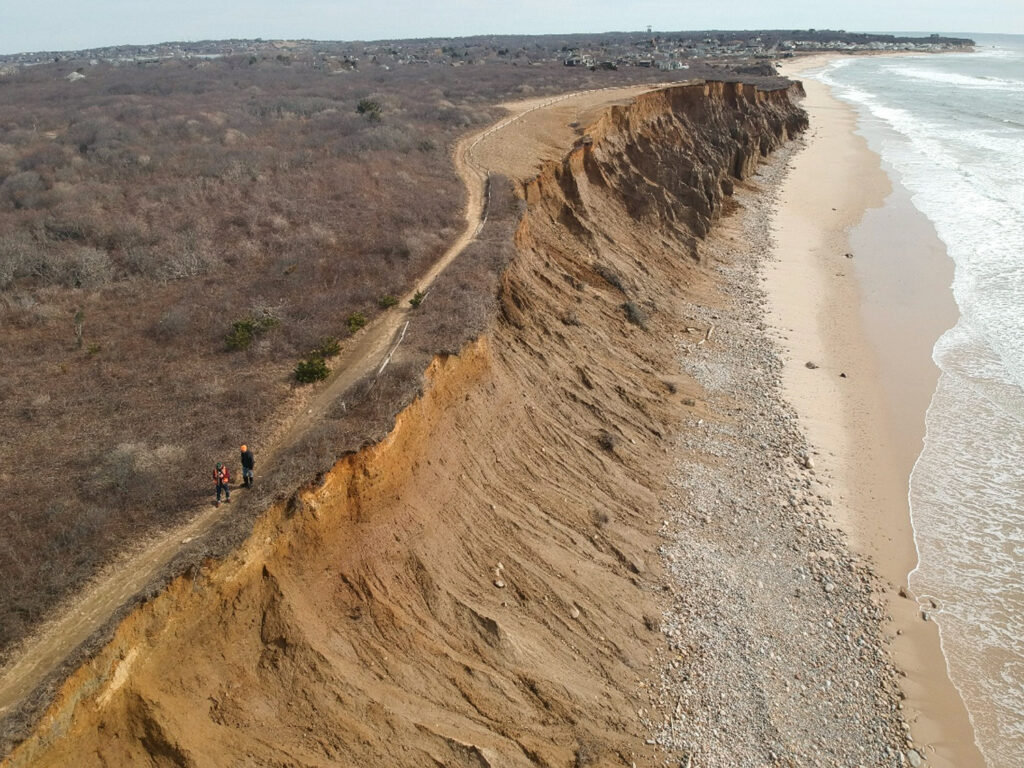
Figure 1.
Figure 1. Walsh, C. (2023, March 16). Erosion Threatens Blufftop Trails in Montauk. The East Hampton Star. https://www.easthamptonstar.com/government/2023316/erosion-threatens-blufftop-trails-montauk
The general population of Suffolk is particularly vulnerable, with homeowners facing threats such as natural disasters, coastal erosion, and flooding. Figure two displays the surveying of erosion on a waterfront property at Edwards Avenue beach in the town of Riverhead. The photo was taken in August of 2024, and is an example of what Suffolk County Executive Edward Romaine considered “catastrophic” damage resulting from heavy rainfall. Romaine called a county state of emergency in response to “help expedite federal and state emergency relief to property owners.”11 Certain groups, like immunocompromised individuals, are especially sensitive to climate-related health risks, particularly those linked to air quality. Economic status also plays a significant role, as lower-income people may struggle to afford or access disaster relief and healthcare in climate-induced emergencies. As climate change continues to impact the region, a combined effort among all stakeholders is essential to protecting the community and the environment.
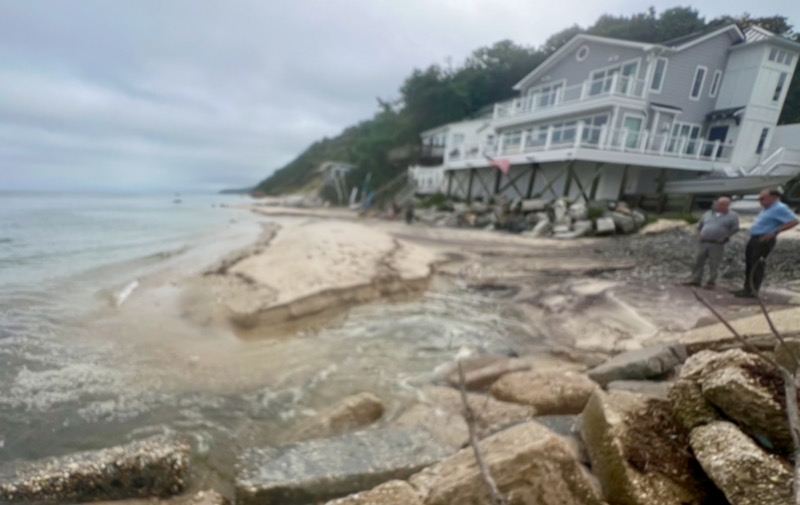
Figure 2.
Figure 2. Civiletti, D. (2024, August 19). Romaine declares state of emergency in Suffolk, officials ask people to report damage online. Riverhead LOCAL. https://riverheadlocal.com/2024/08/19/romaine-declares-state-of-emergency-in-suffolk-officials-ask-people-to-report-damage-online/
In July of 2024, The New York State Department of Environmental Conservation issued an air quality health advisory in the Long Island area concerning ozone2. There are two types of ozone, both good and bad. Stratospheric ozone is naturally occurring in Earth’s atmosphere and protects us from the sun’s harmful ultraviolet rays, while ground-level ozone is created by chemical reactions in response to air pollution3. Inhaling unhealthy amounts of ground-level ozone can increase the risk of health problems such as coughing, breathing difficulty, and lung damage4. It is most likely to reach dangerously high levels on hot, sunny days, not unlike that of the day the advisory was put into effect. The advisory note states, “Suffolk County Health Commissioner Dr. Gregson Pigott advises that all residents, especially young children, seniors, those who exercise outdoors, and those with pre-existing respiratory or heart problems, limit strenuous outdoor activity.” 2 The county government makes sure to provide helpful information to residents, listing warning signs for ozone-related health problems and platforms where you can track the air quality.
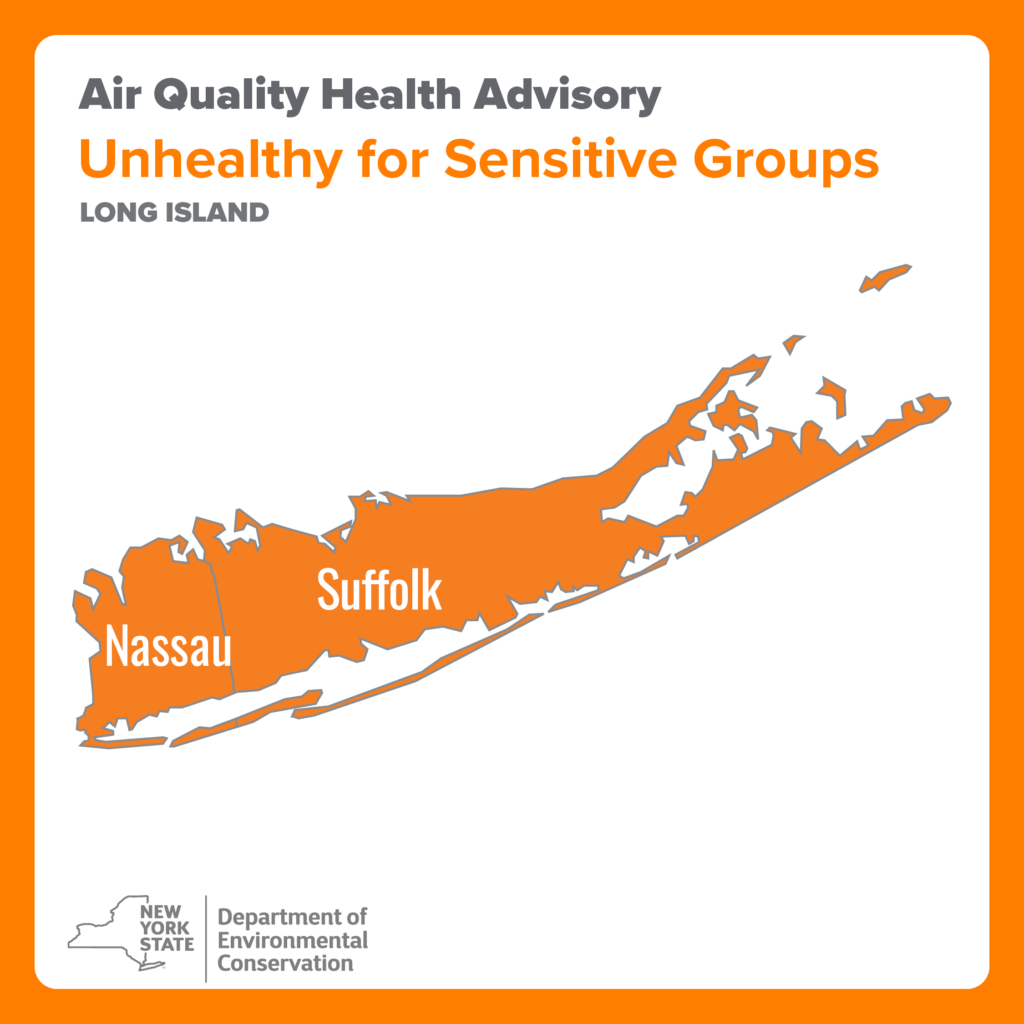
Figure 3.
Figure 3. New York State Dept. of Environmental Conservation. X (formerly Twitter). (n.d.). https://x.com/NYSDEC/status/1819464428024484244/photo/1
Other sources of air pollution in Suffolk County are similar to that of many suburban regions. A majority of the county is not walkable, meaning residents are required to drive themselves or take public transportation. This has made mobile sources of air pollution one of the most common for Suffolk. These sources can emit pollutants such as carbon monoxide, nitrogen oxides, particulate matter, and volatile organic compounds (VOCs).17 This is particularly relevant because VOCs and nitrogen oxides are large contributors to the creation of ozone in the atmosphere, which, as previously stated, has historically been a problem for Suffolk’s air quality. Radon is an indoor air pollutant that can cause severe respiratory conditions after exposure. Suffolk County homes are considered to be low-risk for elevated radon levels since 1987.18 Since then, levels above what is considered safe by federal regulation have only been detected in 96 of over 1800 homes on Long Island.
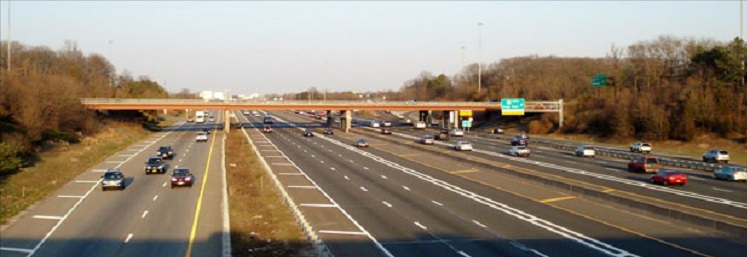
Figure 4.
Figure 4. Long Island Roads – major highways on Long Island. LongIsland.com. (n.d.). https://www.longisland.com/roads.html
Many of Suffolk County’s climate change challenges are linked to water. Long Island is bordered by large bodies of water on three sides, making coastal erosion a major concern. As global temperatures rise, polar ice caps are melting and causing significant increases in sea level, leaving towns on the coasts of Suffolk at risk. Since 1980, average global sea level has increased by four inches, and “in New York specifically, the sea level increase nearly doubles the global average, with a 13 inch sea level rise.” 5 Figure five highlights areas in red that are less than four feet above sea level, making them highly vulnerable to flooding and erosion after storms.17
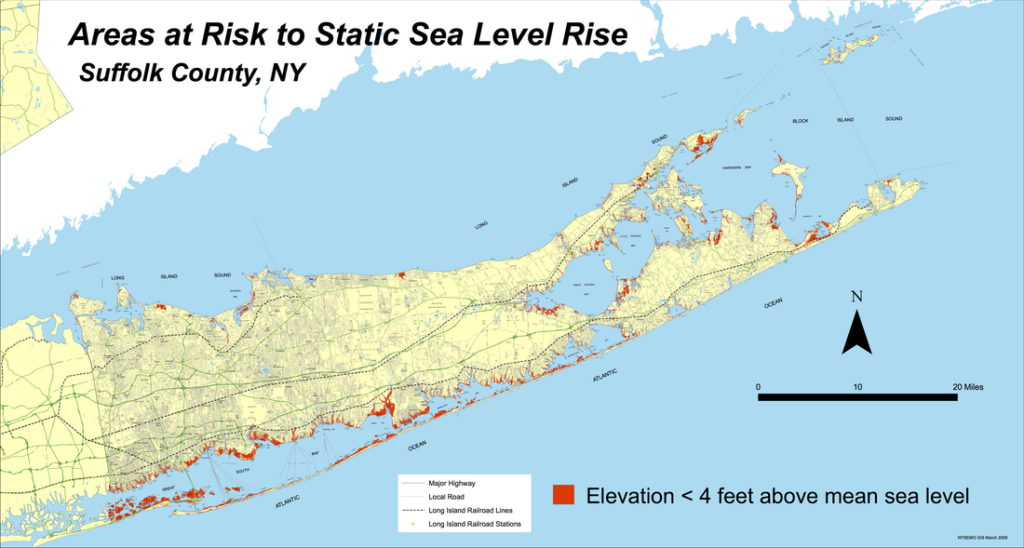
Figure 5.
Figure 5. Future: Rising sea levels and floods in Suffolk County. Tipping Points: Global Climate Change, Made Local. (n.d.). https://www.climatetippingpoints.com/places/future-rising-sea-levels-and-floods-in-suffolk-county
Over a decade ago, it was estimated that the Shinnecock Reservation, 800 acres of protected land on the eastern side of Shinnecock Bay, would be underwater by the year 2050. Since then, the timeline has moved up, now predicting that the peninsula will be submerged by 20401. This poses a significant threat to inhabitants of the land, gradually jeopardizing their homes and livelihoods. Increasing temperatures have also led to worsening damage as a result of storms and hurricanes, most notable Hurricane Sandy in 2012. The event left the peninsula’s coastline “barren and uneven,” 1 creating opportunities for mosquitoes and other disease vectors to swarm and cause damage. The storm, however, opened up the reservation to government intervention, and they received roughly 3.8 million dollars in relief funds to rebuild the shoreline and demonstrate that adapting to climate change can go hand in hand with restoring wildlife habitats1.
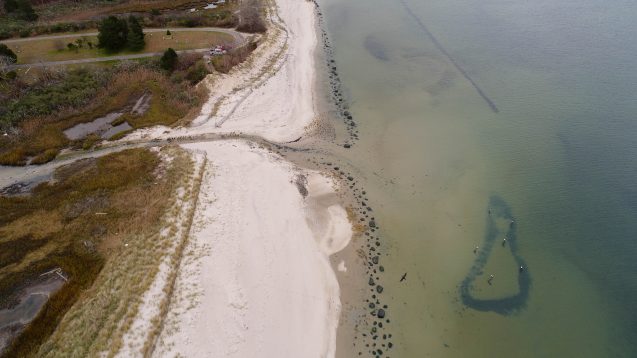
Figure 6.
Figure 6. The tribe that brought a damaged shoreline back to life. State of the Planet. (n.d.). https://news.climate.columbia.edu/2019/09/18/shinnecock-coastal-habitat-restoration-project/
The Coastal Habitat Restoration Project was developed to lay out and reinforce Shinnecock’s commitment to their land and the environment. This is an excellent example of climate resilience and adaptation to climate change. Climate resilience is defined as “the ability to anticipate, prepare for, and respond to hazardous events, trends, or disturbances related to climate.” 9 The reservation is turning around the negative impacts of the rising sea level by putting new policies in place and focusing their efforts on rehabilitation. With help from the federal and state governments, local agencies, and nonprofits, erosion-fighting plants were grown and planted around the beach to form a protective barrier, and a solar powered oyster-hatchery was set up to grow and plant the mollusks on the seafloor to create reefs which would further protect the shore from storm damage1.
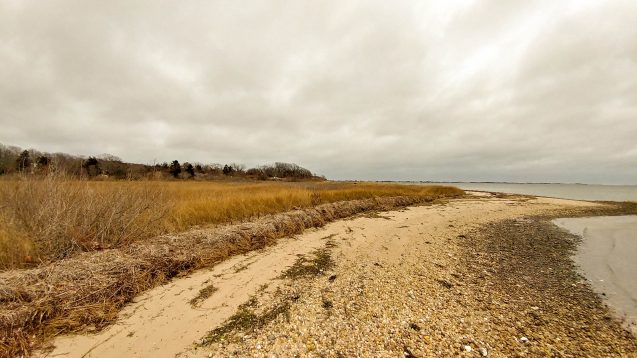
Figure 7.
Figure 7. The tribe that brought a damaged shoreline back to life. State of the Planet. (n.d.). https://news.climate.columbia.edu/2019/09/18/shinnecock-coastal-habitat-restoration-project/
Harmful algal blooms are a serious problem for Suffolk County waterways in the warmer months. These blooms are the result of the process known as eutrophication, or when excess nutrients are present in the water, leading to a buildup of phytoplankton. They become dangerous when species that produce potent toxins or have the potential to cause harmful ecosystem impacts are present6. Air pollution can cause an increase in these buildups, as particulate matter, nitrogen and other depositions have the potential to alter the nutrient levels in bodies of water. Boating, common in Suffolk County, can stir up and suspend nutrients from the seafloor like nitrogen and phosphorus and increase algal blooms7. To combat excess nitrogen in the water, the Shinnecock Kelp Farmers started farming kelp. The plant absorbs nitrogen, improving the water quality1. Aside from these independent efforts, the Suffolk County Office of Ecology launched a capital project, Public Health Related Harmful Algal Blooms, to “monitor the extent to which harmful algal blooms exist in Suffolk County waters and to assess their potential impact on public health.” 6 Both of these projects were looking to decrease the severity of algal blooms in Suffolk County, and were moderately successful. Naturally, a limitation is the continually increasing global temperature, which prolongs and worsens the effects of the blooms in the water5.
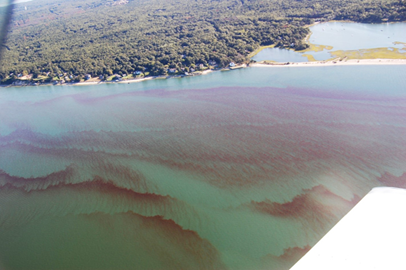
Figure 8.
Figure 8. Public reporting tool helps Long Island’s Suffolk County track harmful algal blooms. NCCOS – National Centers for Coastal Ocean Science. (2025, February 19). https://coastalscience.noaa.gov/news/public-reporting-tool-helps-long-islands-suffolk-county-track-harmful-algal-blooms/
Suffolk County and Long Island as a whole have created a few plausible solutions for the local impacts of climate change. The county government does have a working climate action plan, which is one of the first steps necessary when planning out how we can individually and as a larger community adapt to and combat climate challenges. This plan is a product of the Suffolk County Energy and Climate Action Office. Though all encompassing, this organization is predominantly dedicated to energy development and efficiency in recent years. Water quality is a problem in the Long Island Sound. There are destructive levels of nitrogen that harm both surface and groundwater for the population8. The Long Island Nitrogen Action Plan, launched in 2015, is a collaborative effort focusing on how to most efficiently “reduce nitrogen loading to groundwater and surface water through technical, management, and regulatory/policy actions.” 8 This is a great example of how organizations and policies can enhance our quality of life by regulating and reducing pollution, as well as addressing the harmful effects of climate change. This plan is also connected to air pollution. Nitrogen, a significant air pollutant, is released through vehicle emissions. Regulatory measures could include new laws or policies on how residents fuel their cars. Requiring the use of cleaner fuels would help reduce nitrogen levels in both the air and water. There is not a large amount of county government action honing in on air quality or rising sea levels. Most involvement on this front is done in collaboration with nonprofits or individual communities, such as the Shinnecock Reservation. Suffolk is making strides in the direction of sustainability, but there is still work to be done.
Something is sustainable if it meets the social, economic, and environmental needs of present and future generations through different strategies. Suffolk County has crafted a handful of solutions to fight climate change and its impacts on a local scale. While there are limitations to these solutions, and they do not address everything, they align with our definition of a sustainable entity. The county cares about the future and health of its people. They are implementing these policies and regulations and establishing these organizations to help us adapt to climate change while also actively reducing its impact for the benefit of the environment.
References
- This Long Island Tribe is dealing with the impact of climate change. (n.d.). Sierra Club. https://www.sierraclub.org/sierra/long-island-tribe-dealing-impact-climate-change
- Air quality health advisory – Ozone. (2024, July 14). Suffolk County Government. https://www.suffolkcountyny.gov/News/ArtMID/583/ArticleID/12156
- Ground-level ozone basics. (2023, June 2). US EPA. https://www.epa.gov/ground-level-ozone-pollution/ground-level-ozone-basics
- Ozone. (n.d.). New York State Department of Health. https://www.health.ny.gov/environmental/outdoors/air/ozone.htm
- Climate change impacts happening on Long Island. (2021, June 29). Home -. https://www.pinebarrens.org/bridge-to-the-barrens/climate-change-impacts-happening-on-long-island/
- Harmful algal blooms. (n.d.). Suffolk County Government. https://www.suffolkcountyny.gov/Departments/Health-Services/Environmental-Quality/Ecology/Harmful-Algal-Blooms
- Boatsetter Team. (2022, September 20). Algal blooms: What boaters should know. Boatsetter. https://www.boatsetter.com/boating-resources/algal-blooms-and-nutrient-pollution
- Long Island nitrogen action plan (LINAP). (n.d.). Department of Environmental Conservation. https://dec.ny.gov/nature/waterbodies/oceans-estuaries/linap
- Climate resilience portal. Center for Climate and Energy Solutions. (2024, June 12). https://www.c2es.org/content/climate-resilience-overview/
- Walsh, C. (2023, March 16). Erosion Threatens Blufftop Trails in Montauk. The East Hampton Star. https://www.easthamptonstar.com/government/2023316/erosion-threatens-blufftop-trails-montauk
- Civiletti, D. (2024, August 19). Romaine declares state of emergency in Suffolk, officials ask people to report damage online. RiverheadLOCAL. https://riverheadlocal.com/2024/08/19/romaine-declares-state-of-emergency-in-suffolk-officials-ask-people-to-report-damage-online/
- New York State Dept. of Environmental Conservation. X (formerly Twitter). (n.d.). https://x.com/NYSDEC/status/1819464428024484244/photo/1
- he tribe that brought a damaged shoreline back to life. State of the Planet. (n.d.). https://news.climate.columbia.edu/2019/09/18/shinnecock-coastal-habitat-restoration-project/
- Public reporting tool helps Long Island’s Suffolk County track harmful algal blooms. NCCOS – National Centers for Coastal Ocean Science. (2025, February 19). https://coastalscience.noaa.gov/news/public-reporting-tool-helps-long-islands-suffolk-county-track-harmful-algal-blooms/
- Governor Hochul announces investments in Long Island resiliency projects to protect communities from Extreme Weather. Governor Kathy Hochul. (n.d.). https://www.governor.ny.gov/news/governor-hochul-announces-investments-long-island-resiliency-projects-protect-communities#:~:text=New%20State%20funding%20to%20the,change%20challenges%20affecting%20the%20region.
- Future: Rising sea levels and floods in Suffolk County. Tipping Points: Global Climate Change, Made Local. (n.d.). https://www.climatetippingpoints.com/places/future-rising-sea-levels-and-floods-in-suffolk-county
- Vehicle emissions. Vehicle emissions | Green Vehicle Guide. (n.d.). https://www.greenvehicleguide.gov.au/pages/UnderstandingEmissions/VehicleEmissions
- Diamond, K. (2019, December 9). Radon levels in Long Island Homes. Newsday. https://projects.newsday.com/databases/long-island/radon-levels-homes/
- Long Island Roads – major highways on Long Island. LongIsland.com. (n.d.). https://www.longisland.com/roads.html